Muscle Protein Synthesis (MPS)
Skeletal muscle hypertrophy occurs when muscle protein synthesis (MPS) chronically exceeds muscle protein breakdown. Resistance training stimulates MPS through mechanotransduction pathways, primarily via mTORC1 activation.
Exercise-Induced MPS
Phillips et al. (1997) demonstrated that resistance exercise significantly elevates mixed muscle protein synthesis in humans. PubMed Subsequent work confirmed that resistance exercise sensitizes muscle to amino acid intake for up to 24-48 hours post-training.
Protein Dose Response
Moore et al. (2009) quantified the dose-response relationship of protein intake after resistance training in healthy young men. PubMed
Six resistance-trained young men (average body mass ~86 kg) performed leg-based resistance exercise and consumed 0, 5, 10, 20, or 40 g of whole egg protein.
“Ingestion of 20 g intact protein is sufficient to maximally stimulate MPS and APS after resistance exercise.”
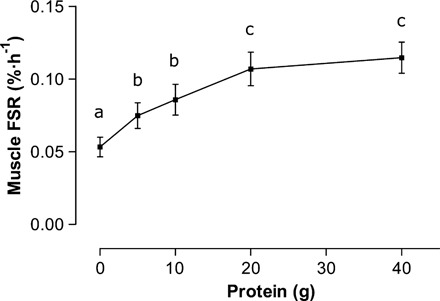
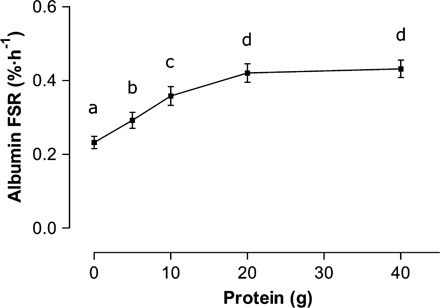
Muscle protein synthesis increased in a dose-dependent manner up to 20 g (~0.23-0.25 g/kg body mass), after which it plateaued. Ingesting 40 g did not further increase MPS but significantly increased leucine oxidation, indicating excess amino acids were oxidized rather than incorporated into muscle tissue.
Daily Protein Intake
Morton et al. (2018) conducted a systematic review and meta-analysis of 49 resistance training studies including over 1,800 participants to determine the optimal daily protein intake for hypertrophy. PubMed
“Total protein intake of ~1.6 g/kg/day maximizes resistance training-induced gains in fat-free mass.”
Using a segmented regression model, the authors identified a breakpoint at approximately 1.6 g/kg/day, beyond which additional protein intake produced diminishing returns. The upper 95% confidence interval extended to ~2.2 g/kg/day.
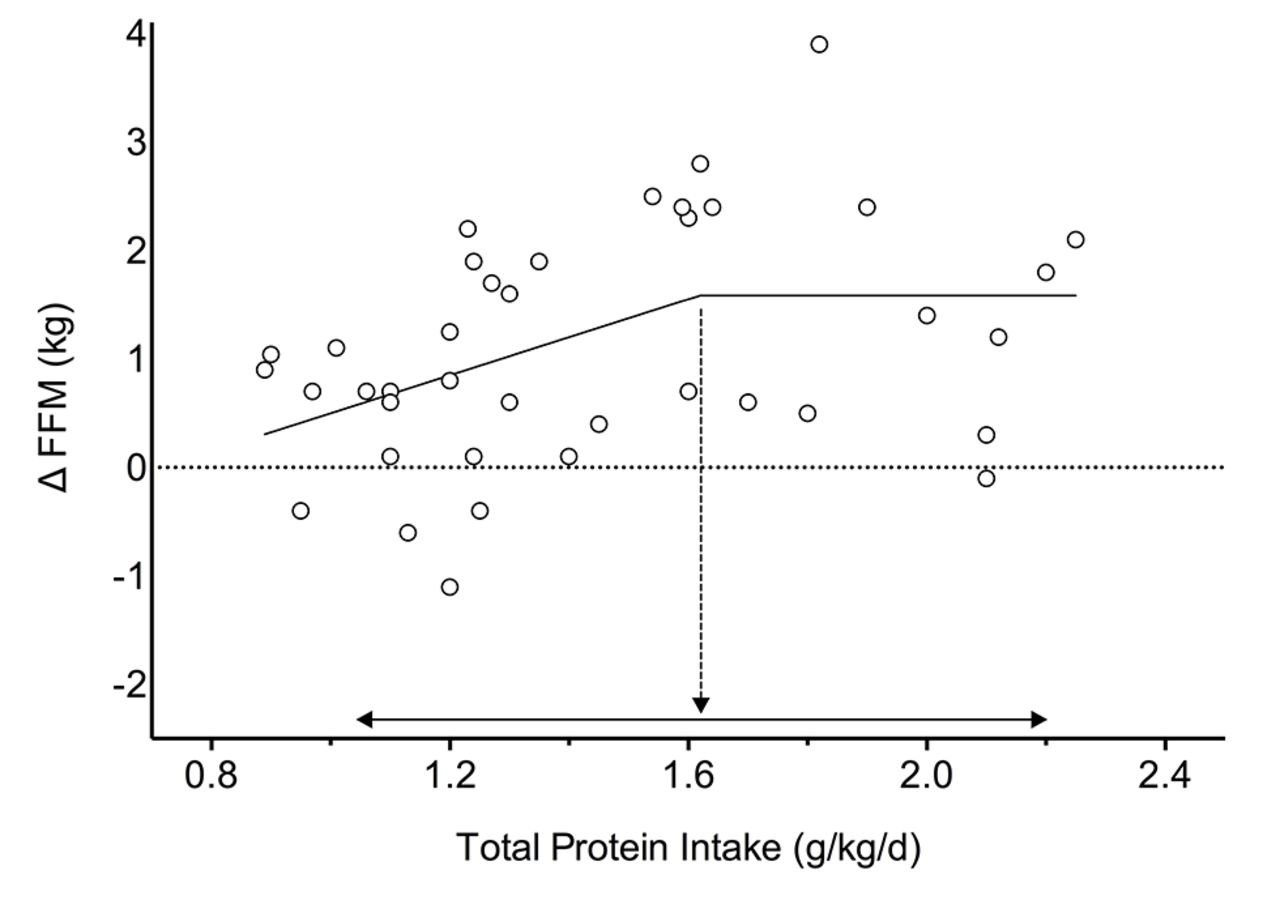
Higher intakes may be advantageous during caloric deficits and very high training volumes.
MPS Protein Calculator
This calculator estimates evidence-based per-meal and daily protein intake targets associated with maximal stimulation of muscle protein synthesis.
- Per-meal target: 0.25-0.40 g/kg
- Daily intake target: ~1.6 g/kg/day
- Upper range (context dependent): ~2.2 g/kg/day
Per-meal dose: ~0.25-0.40 g/kg (Moore et al., 2009).
Daily intake breakpoint: ~1.6 g/kg/day; upper 95% CI ~2.2
g/kg/day (Morton et al., 2018).
Conclusion
Hypertrophy is the cumulative result of repeated elevations in MPS, driven by mechanical tension and supported by adequate protein intake. In young adults, per-meal protein doses of ~0.25-0.40 g/kg appear sufficient to maximize the acute MPS response, while total daily intakes of ~1.6 g/kg/day maximize resistance training-induced gains in fat-free mass for most individuals.
Intakes beyond these levels produce diminishing returns under normal energy-balanced conditions, as excess amino acids are increasingly oxidized rather than incorporated into muscle tissue. However, higher intakes (up to ~2.2 g/kg/day) may be advantageous during caloric deficits, very high training volumes, or when preservation of lean mass is prioritized.